Know · 03 · Field manual · PDF
The Thinking Field Manual
How to know what's true, and how sure to be.
A forwarded screenshot, a confident AI answer, a headline with a percentage, a colleague's favorite explanation. This manual gives you a short, repeatable way to check a claim before you act on it or pass it on: say exactly what's claimed, separate what was seen from what was concluded, ask how the source could know, ask how common it is anyway, find the other explanations, and put a number on how sure you are.
PDF only: instant download, 84 A5 pages, no printed copy. Taxes calculated at checkout.
Not useful? Full refund within 14 days, no questions asked.
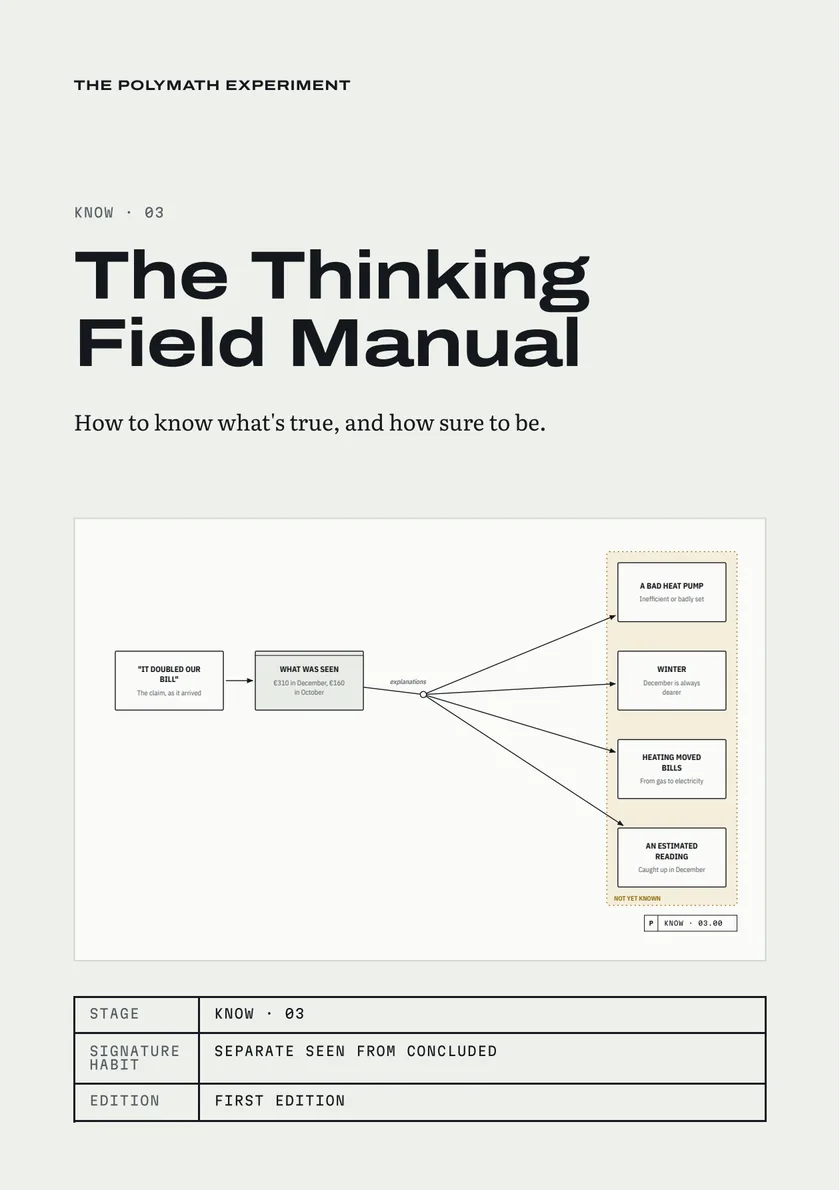
Know · 03 · One idea, drawn twice
Draw it as it feels, then as it works
The manual uses the same grammar as the book: the claim as it arrived, then the explanations that fit and how to tell them apart. Here's a pair from the book, Chapter 1 of The Clear Mind.
The method: check the claim
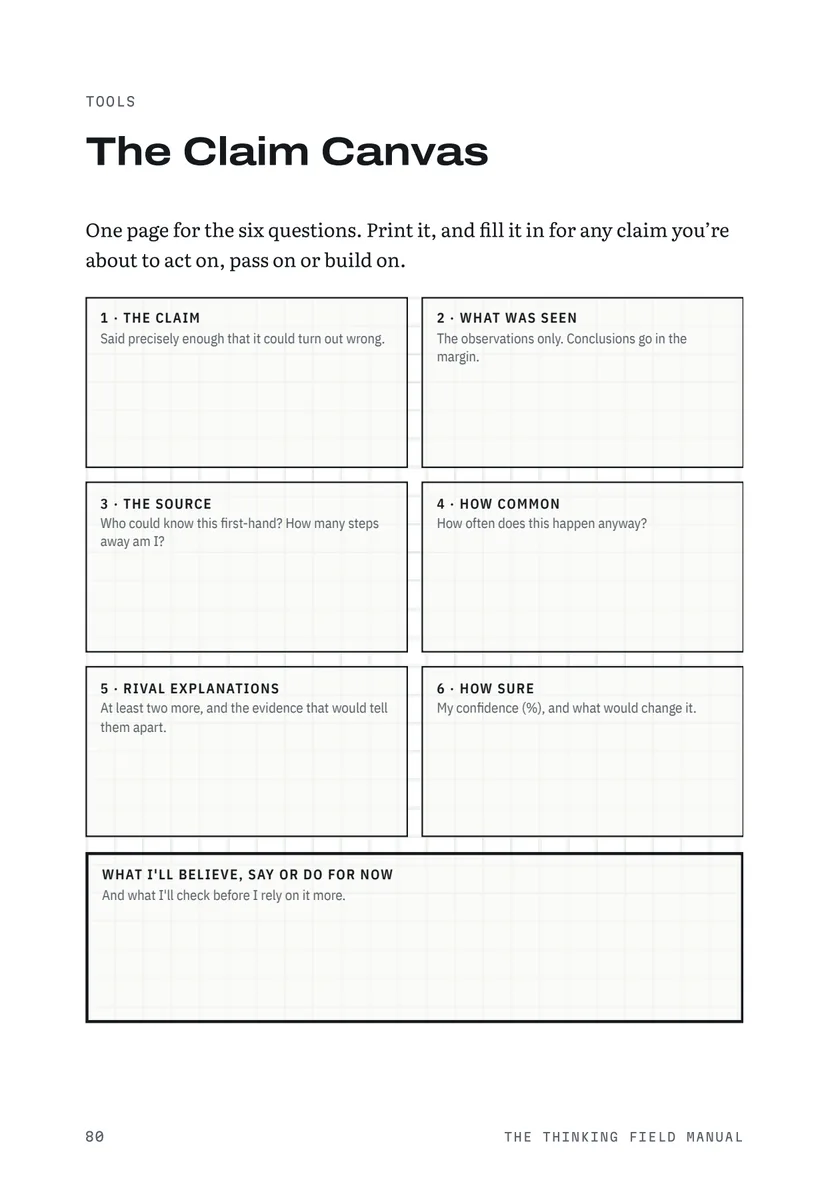
- What exactly is the claim? Precise enough that it could turn out wrong.
- What was actually observed? Separate from what was concluded.
- How could the source know?
- How common is this anyway?
- What else could explain it? At least two rivals.
- How sure am I, and what would change my mind?
How investigators check
Every unit has an investigator's view: how doctors making a diagnosis, accident investigators, epidemiologists, fact-checkers and intelligence analysts check the same kind of claim, translated for an ordinary week. Then three field cases, an AI summary, a local headline and a manager's favorite explanation, a printable Claim Canvas and an Assumption Audit for the beliefs your plans rest on.
It won't tell you which side of any argument to take. It teaches methods that work on any claim, including the ones you already agree with.
Eleven units, one sentence each
Know · 03.01 – 03.11- 03.01Seen and concludedWhat you saw and what you concluded are different things. Keep them in separate columns.
- 03.02A claim that could be wrongA claim too vague to be wrong is too vague to be useful.
- 03.03How could they know?Ask how the source could know, not only who the source is.
- 03.04How common is it?Before you judge the case, ask how often this happens anyway.
- 03.05Rival explanationsFor every explanation you like, find two more, and look for evidence that tells them apart.
- 03.06Together isn't causeTwo things that rise together may share a cause, run the other way, or be chance.
- 03.07Small numbersSmall samples swing wildly. Don't read a pattern from a handful.
- 03.08Back toward ordinaryAfter an extreme result, expect a more ordinary one, whatever you do.
- 03.09The missing evidenceAsk what you're not seeing: the failures that left no trace.
- 03.10Wanting it trueCheck hardest the claims you most want to believe.
- 03.11UpdatingMove your confidence in proportion to the evidence, in both directions.
Inside the PDF
A5 pages · read on screen or print at home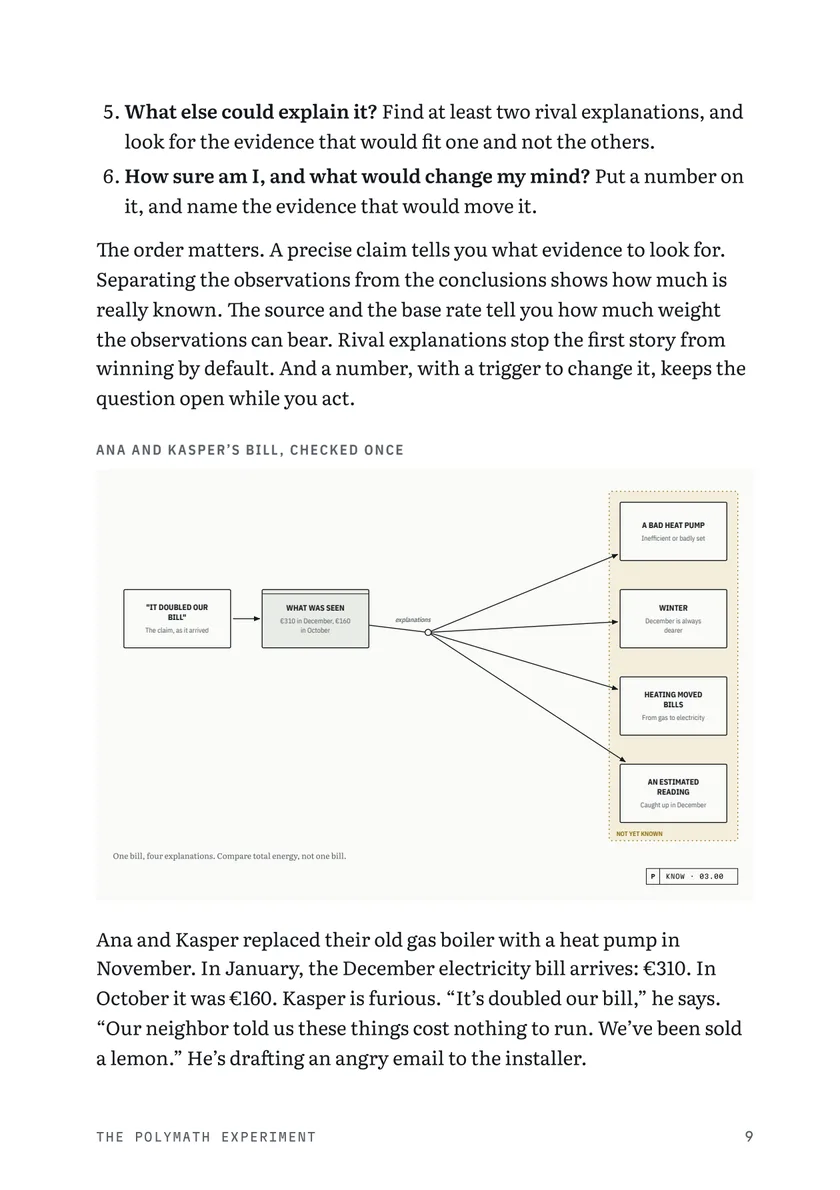
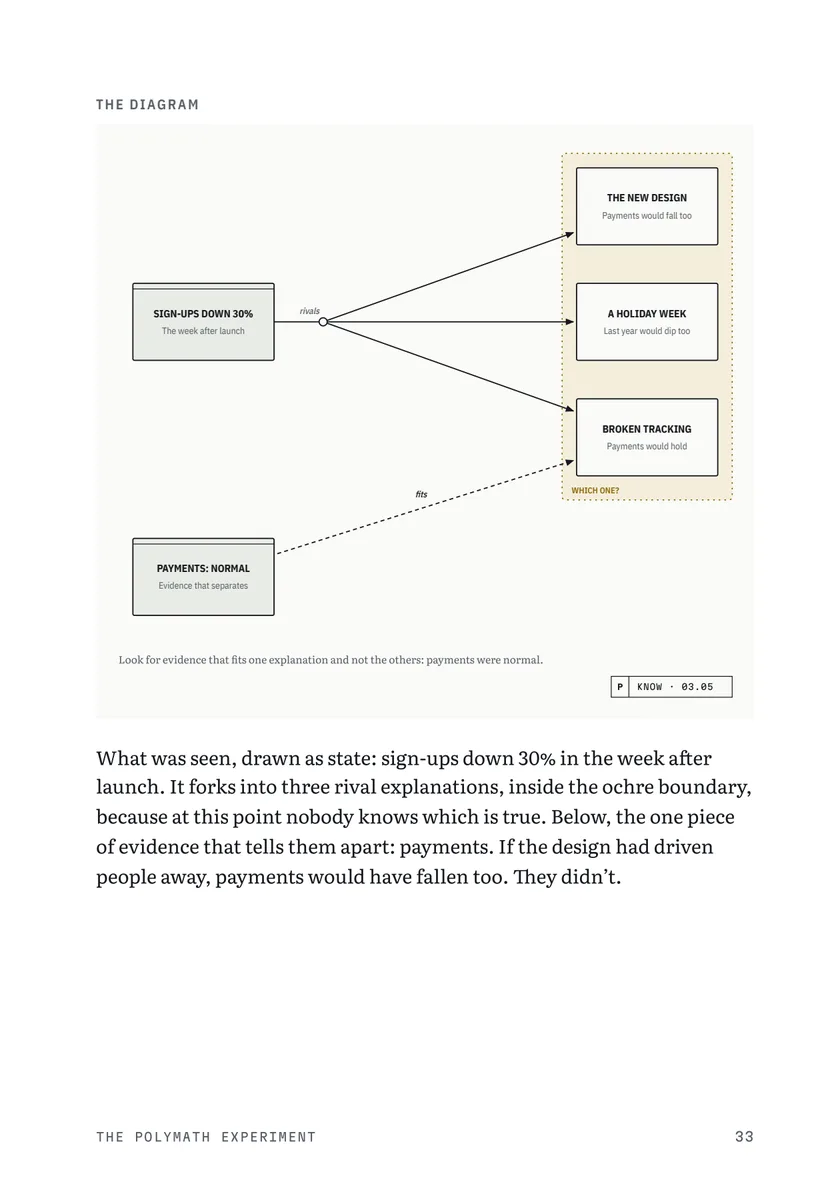
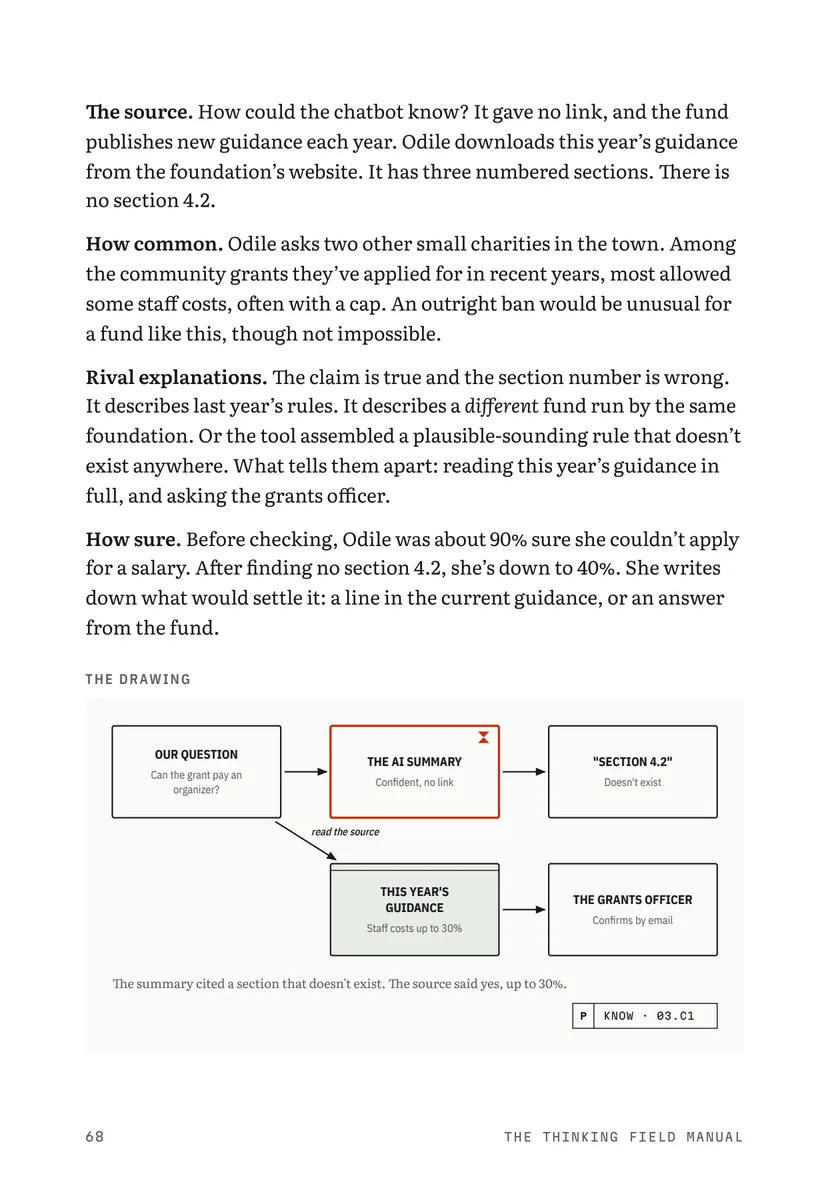
Where it fits
The manual is the entry to the Know stage; the book, The Clear Mind, goes deeper, and you can get both as a set for €39. Once you know how sure you are, The Decision Field Manual helps you decide what to do about it. For claims about how things work, where one cause is really a system of them, try The Systems Field Manual.
Start free
The way of thinking behind this manual grows out of The Polymath Bible, which is free. Get the book and a weekly letter with one idea, one diagram and one exercise.