Know · 03 · The book · PDF
The Clear Mind
How to know what's true in a world of confident claims.
Most of what we believe, we never checked, and the claims that matter arrive in shapes that hide how they were made: a confident sentence, a number, a screenshot, a friend who's sure, an answer from a machine. This book shows how to separate what was seen from what was concluded, trace a claim to someone who could know, read numbers and charts honestly, tell when one thing really causes another, notice what you want to be true, and say how sure you are, so your confidence fits the evidence.
PDF only: instant download, 317 A5 pages, no printed copy. Taxes calculated at checkout.
Not useful? Full refund within 14 days, no questions asked.
Know · 03 · One idea, drawn twice
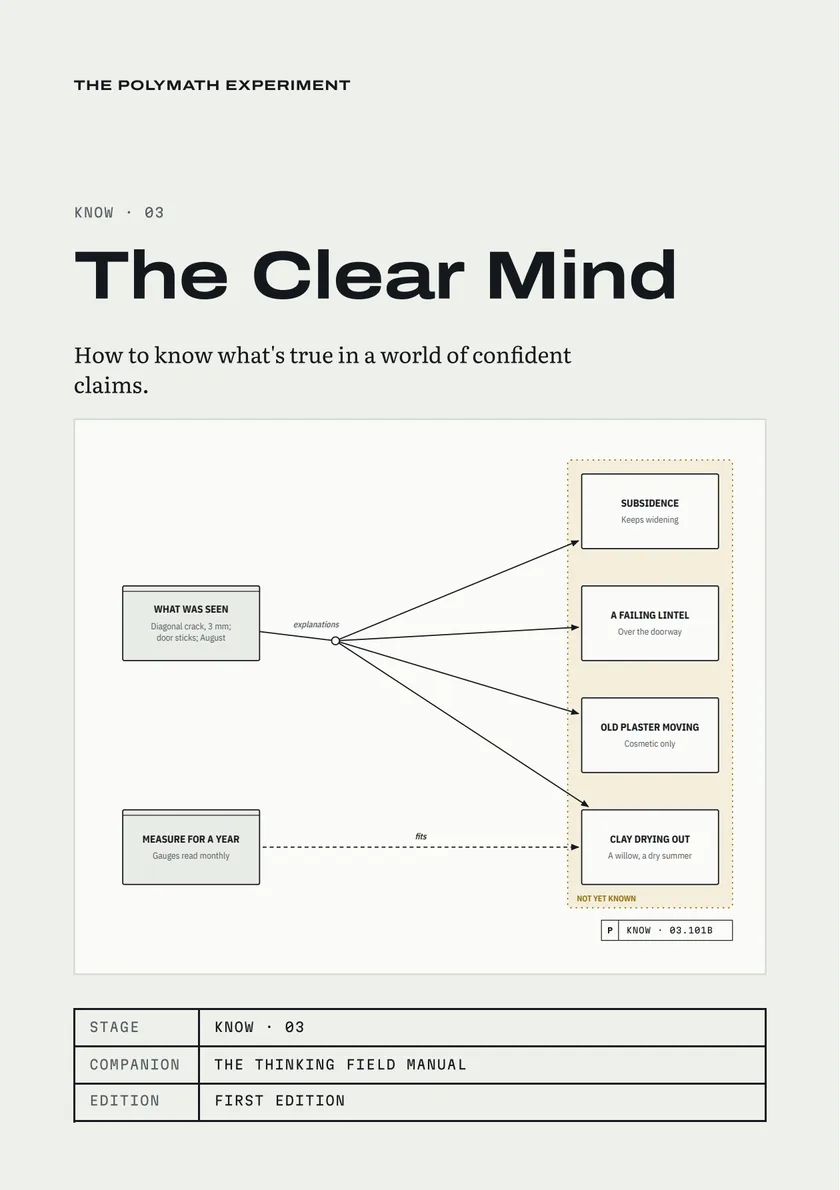
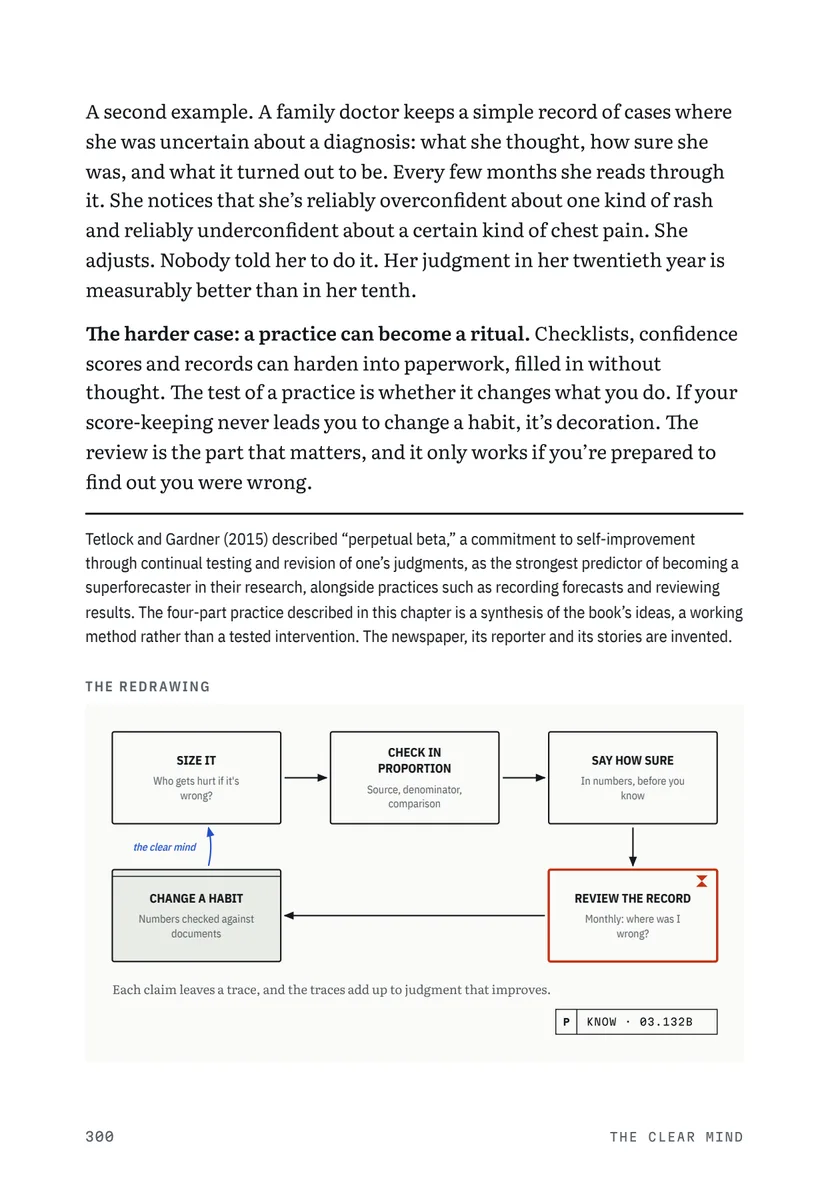
Every chapter draws a situation twice
First as the person believed it, then as the evidence actually stands. Here's the pair from Chapter 1, The Crack in the Wall.
The method
Every chapter draws one claim twice
First as it first appeared: one explanation, one chain of telling, one conclusion that felt like a fact. Then again as it really is: what was actually seen, where the claim came from, what else could explain it, and how sure anyone had a right to be.
The gap between the two drawings is the lesson. Each chapter then shows how doctors, accident investigators, epidemiologists, fact-checkers and auditors handle the same idea, where it misleads, and ends with an experiment to try on a claim you actually believe.
- 32chapters, each built around one claim
- 64diagrams in one consistent grammar
- 3interludes: a records committee, a fact-checker's desk and the Broad Street pump
- 57sources, every one checked, with a note on how strong the evidence is
Six parts
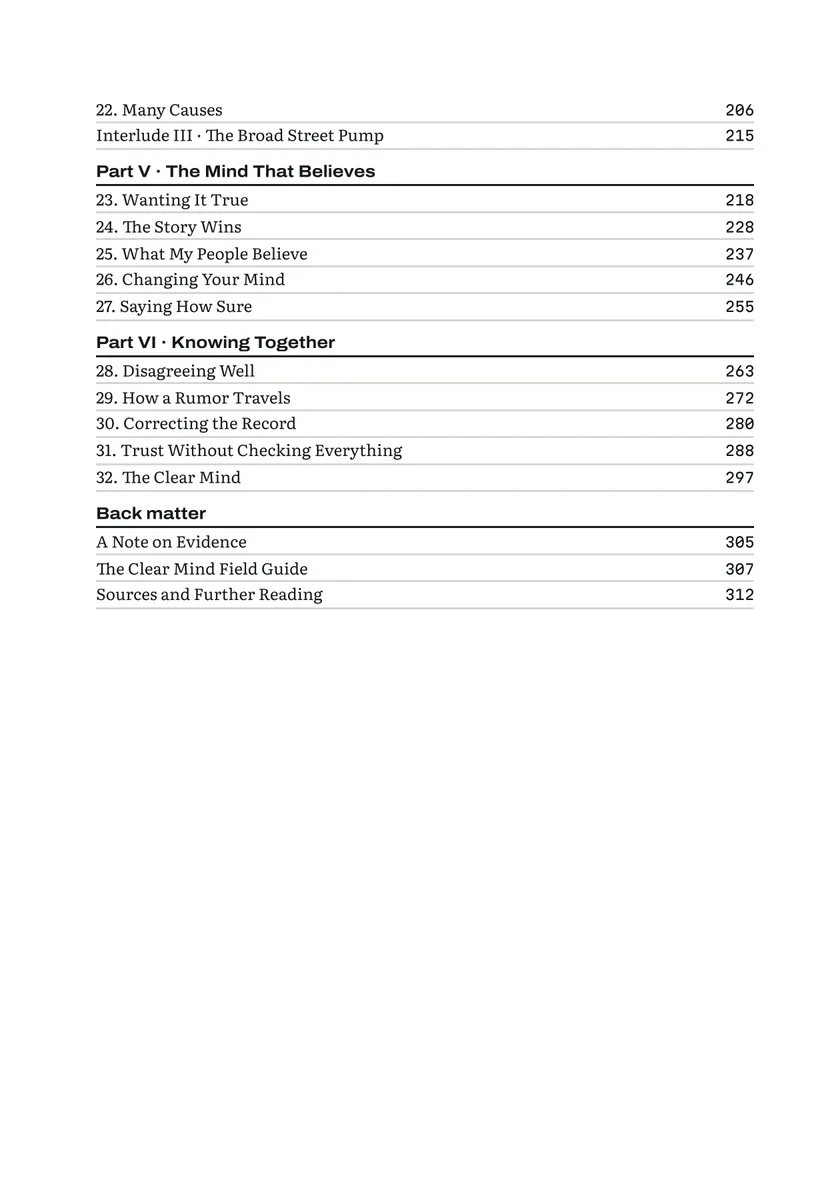
Know · 03.101 – 03.132- Part IWhat You Actually KnowChapters 1–5Seen and concluded, claims precise enough to be wrong, memory, why you believe what you believe, and seeing what you expect.
- Part IISourcesChapters 6–10Chains of telling, the edge of expertise, where numbers come from, echoes that look like agreement, and machines that sound sure.
- Part IIINumbers and ChanceChapters 11–16Clusters, small samples, the return to ordinary, relative and absolute risk, honest charts, and averages that describe nobody.
- Part IVCausesChapters 17–22Common causes, arrows that point backward, fair comparisons, getting better anyway, mechanisms, and many causes at once.
- Part VThe Mind That BelievesChapters 23–27Wanting it true, stories that win, beliefs that mark belonging, changing your mind by the right amount, and saying how sure.
- Part VIKnowing TogetherChapters 28–32Disagreeing well, how rumors travel, correcting the record, whom to trust, and the clear mind as a practice.
Inside the PDF
A5 pages · read on screen or print at home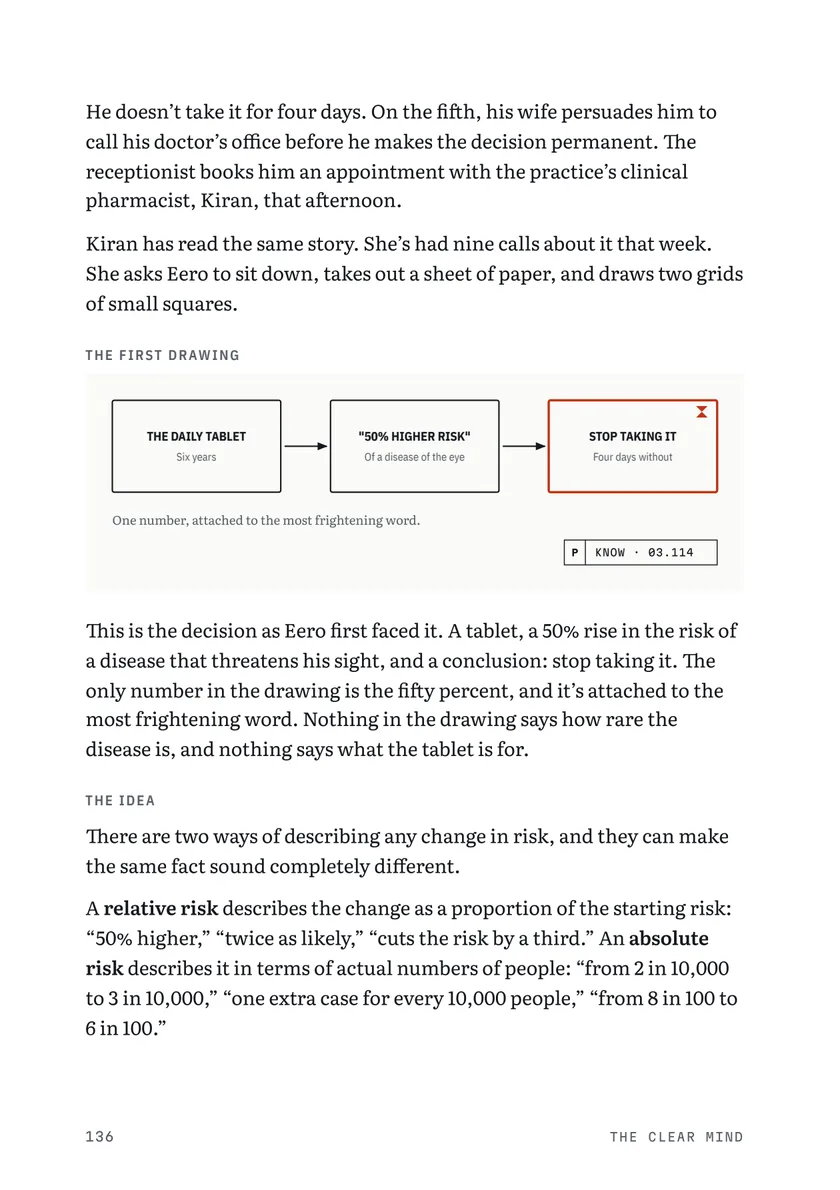
Know · 03 · The set · PDFs
The book and the field manual
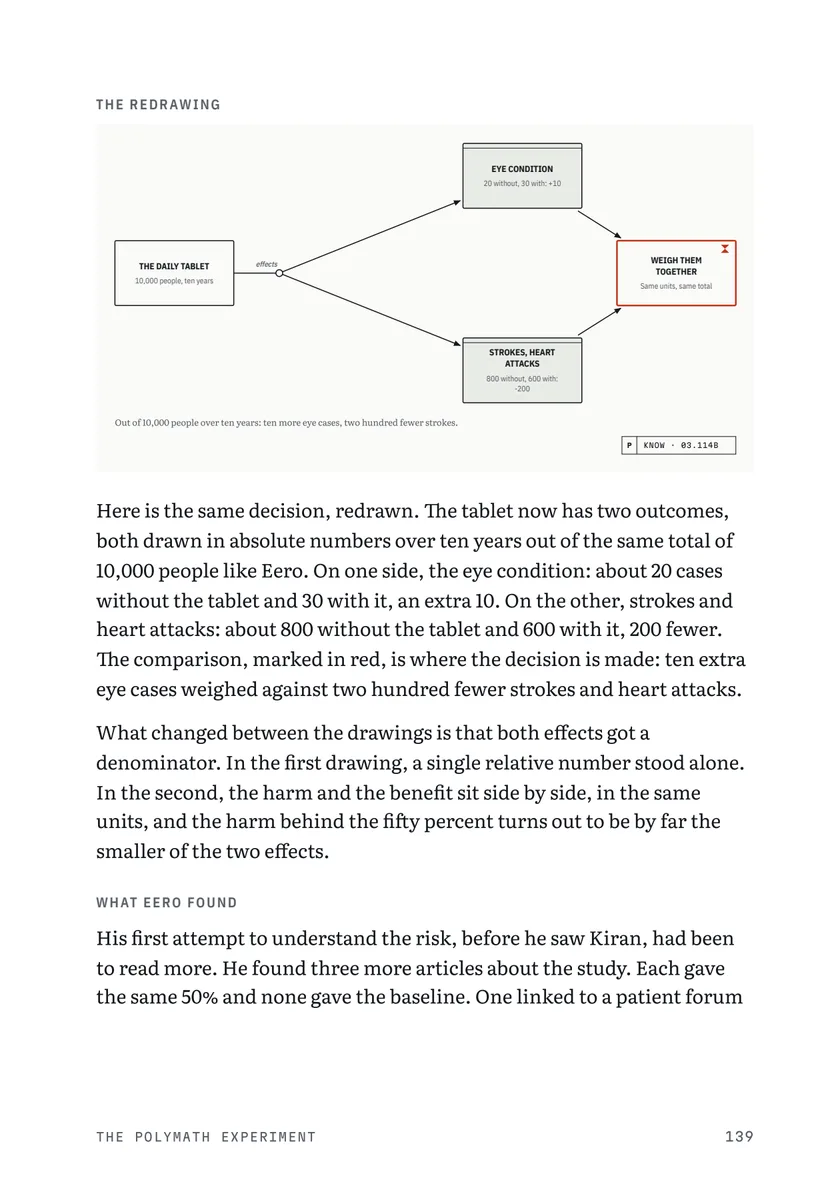
The book explains why sensible people believe untrue things and how to know what's true. The Thinking Field Manual gives you the six questions, eleven concepts, a printable Claim Canvas and an Assumption Audit to use on the next claim that matters. Both share one grammar and one set of sheet numbers.
- The Clear MindPDF · 317 pp
- The Thinking Field ManualPDF · 84 pp
PDF only: instant download of both files, no printed copies. Full refund within 14 days, no questions asked.
Start free
The way of thinking in this book grows out of The Polymath Bible, which is free. Get the book and a weekly letter with one idea, one diagram and one exercise.
Who it's for
Anyone who reads, shares and acts on claims about health, money, work and the news, and wants a steadier way to tell what's true without becoming cynical. It takes no political side. Examples involve health, money and family; they illustrate reasoning and are not professional advice.