Create · 07 · Field manual · PDF
The Creation Field Manual
How to make something new, and finish it, one step at a time.
A song you've been meaning to write, a product that's still a sketch, a lesson, a story, an event, a garden. This manual gives you a short, repeatable way to make something new: say what you're making and for whom, collect what to make it from, make many versions before you choose, judge the work with help, take things away, and finish on a date. Then the 30-Day Creation Challenge walks you through it on something real, one small task a day.
PDF only: instant download, 85 A5 pages, no printed copy. Taxes calculated at checkout.
Not useful? Full refund within 14 days, no questions asked.
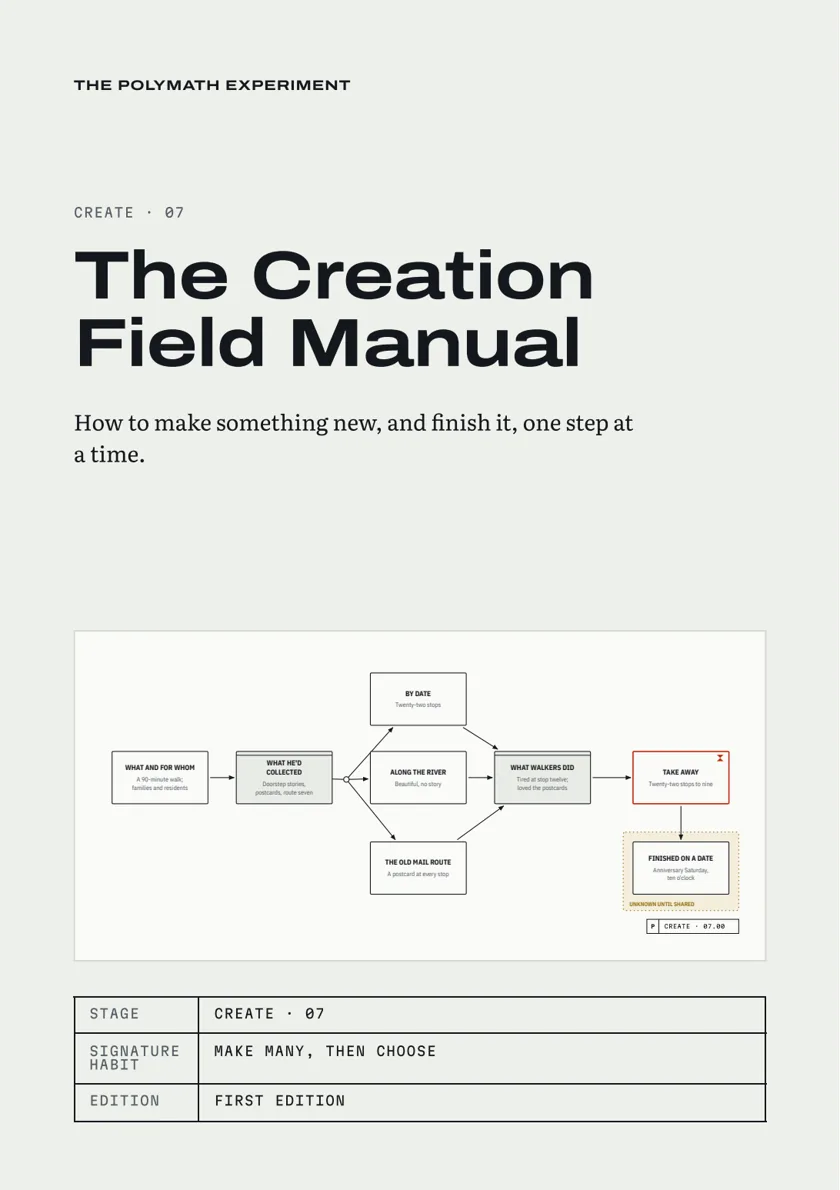
Create · 07 · One idea, drawn twice
Draw it as it feels, then as it works
The manual uses the same grammar as the book: the first idea as it arrives, then what the work actually needs. Here's a pair from the book, Chapter 3 of The Creator's Mind.
The method: make the thing
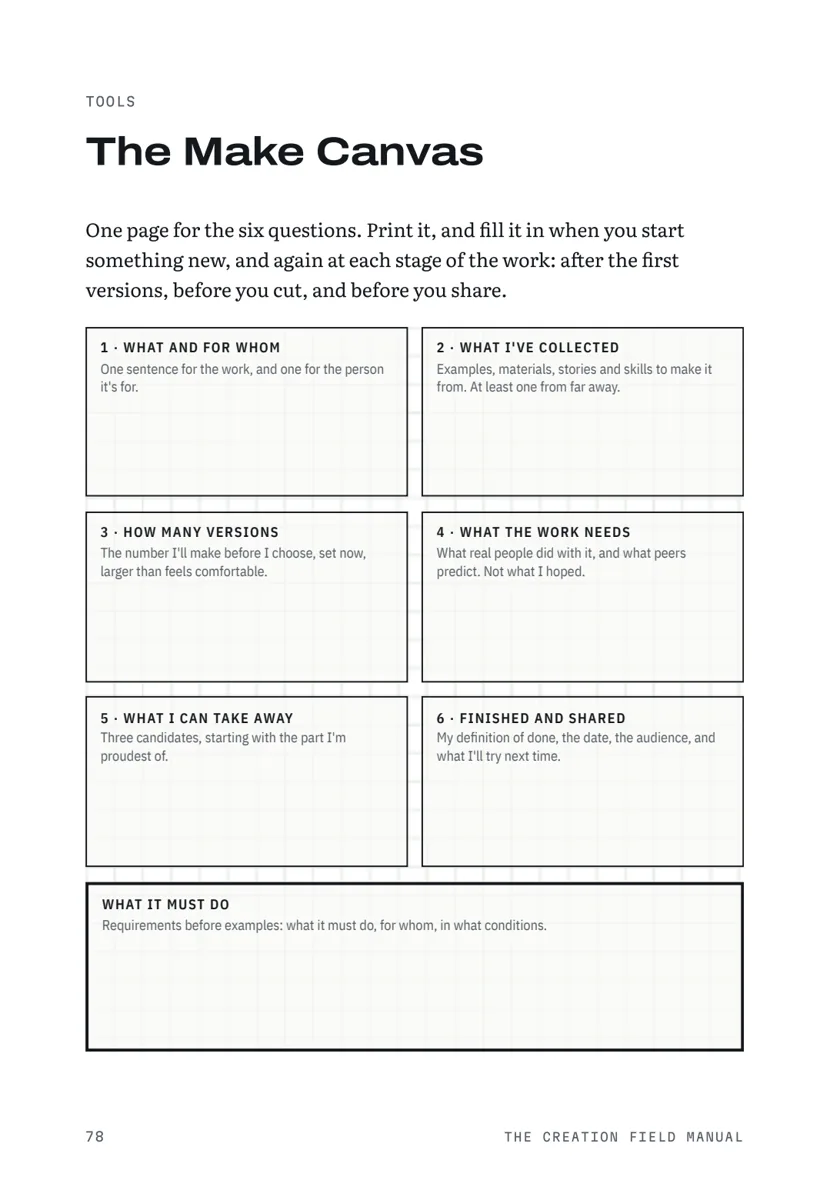
- What am I making, and for whom?
- What have I collected to make it from?
- How many versions can I make before I choose?
- What does the work need, rather than what I hoped it would be?
- What can I take away?
- When will it be finished and shared, and what will I learn from that?
How craftspeople make
Every unit has a craftsperson's view: how tailors, shoemakers, bookbinders, letterers, printmakers and bakers handle the same moment, and what transfers to any kind of making. Then three field cases, a woodturner whose bowls didn't sell, a guitarist with eight weeks to write a wedding song and a library team making a room teenagers will use, a printable Make Canvas, the 30-Day Creation Challenge and a Weekly Review.
It doesn't promise you're a secret genius. It treats creativity as ordinary habits that anyone can practice.
Eleven units, one sentence each
Create · 07.01 – 07.11- 07.01New and workingAsk two questions of every idea: is it new, and does it work for the people it's for?
- 07.02Start from what it's forWrite down what the thing must do before you look at what already exists.
- 07.03One strange pairingKeep the base familiar, and bring in one thing from far away.
- 07.04Make manyMake many cheap attempts, and judge after.
- 07.05Alone, then togetherGenerate alone, pool without names, then choose together.
- 07.06The useful wallWhen everything is possible, choose one limit connected to the heart of the work.
- 07.07Step awayWhen you start circling, step into something easy, and come back with a notebook.
- 07.08The rough wholeMake a rough version of the whole, then several, before you make any part good.
- 07.09Judge with helpAsk peers to forecast, and when you criticize, say why.
- 07.10Take it awayBefore you add anything, ask what you could remove.
- 07.11Done is a decisionDefine done in advance, set a date, and share.
Inside the PDF
A5 pages · read on screen or print at home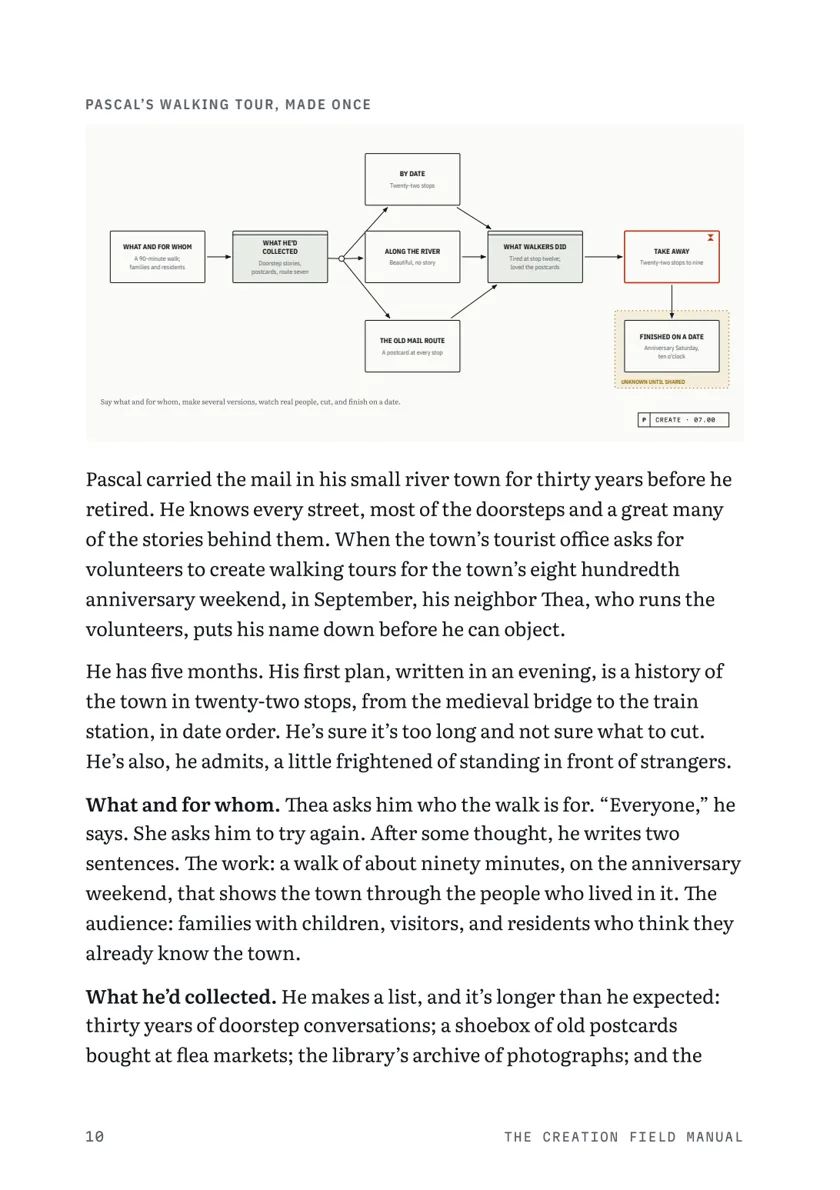
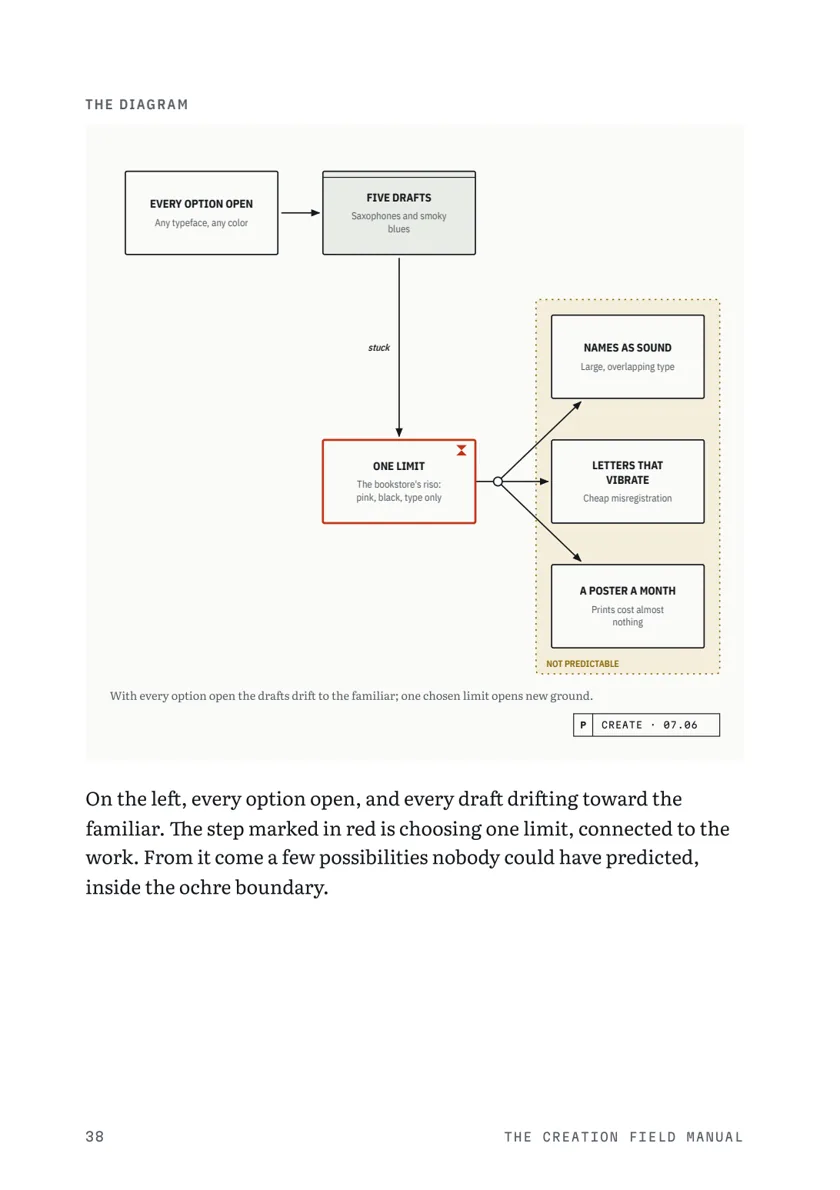
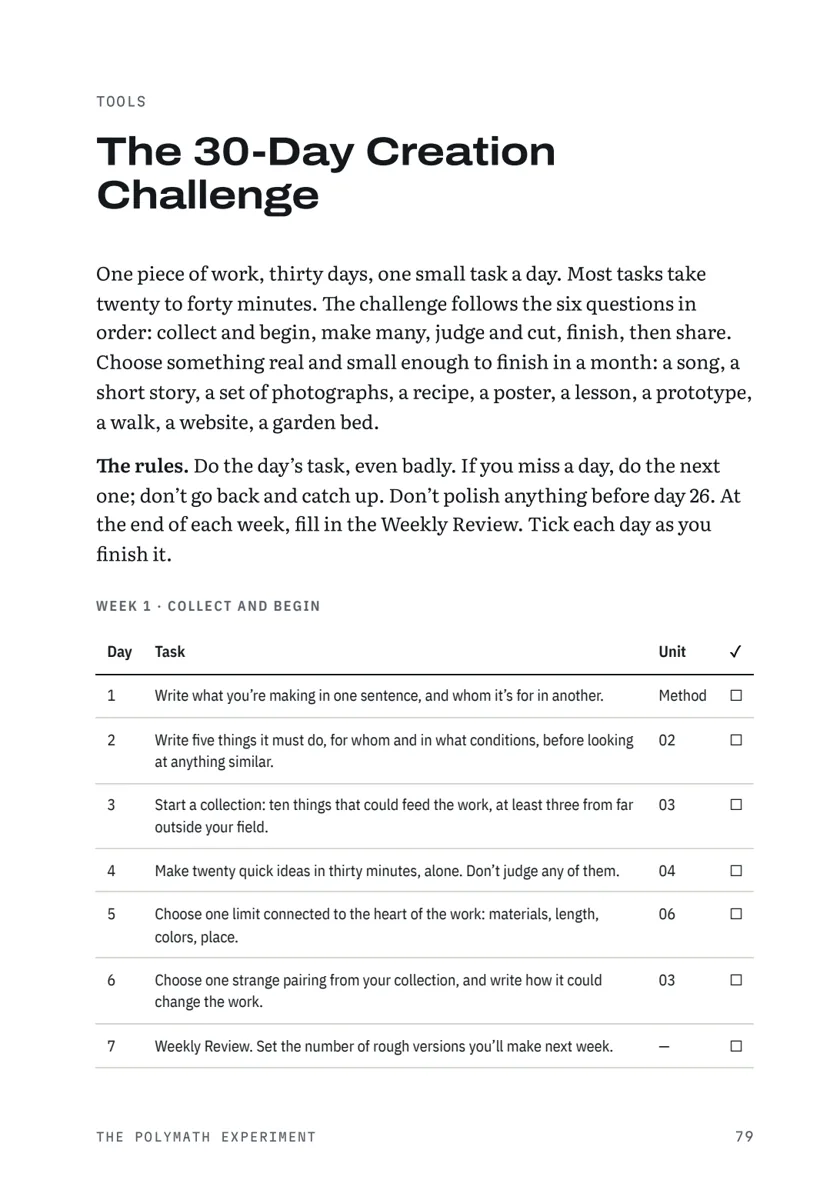
Where it fits
The manual is the entry to the Create stage; the book, The Creator's Mind, goes deeper, and you can get both as a set for €39. For when the work meets the world, The Adaptation Manual helps you decide whether to persist, change course or let go. For testing the beliefs your work rests on, try The Thinking Field Manual.
Start free
The way of thinking behind this manual grows out of The Polymath Bible, which is free. Get the book and a weekly letter with one idea, one diagram and one exercise.