See · 02 · The book · PDF
The Systems Mind
How to see the hidden architecture of ordinary life, and change it without making things worse.
Why does the same kind of bad week keep happening? Why does the wider road fill up again, the extra hire change nothing, and the target make the work worse? This book teaches you to see the structure behind the events, and to find the change that actually helps.
PDF only: instant download, 310 A5 pages, no printed copy. Taxes calculated at checkout.
Not useful? Full refund within 14 days, no questions asked.
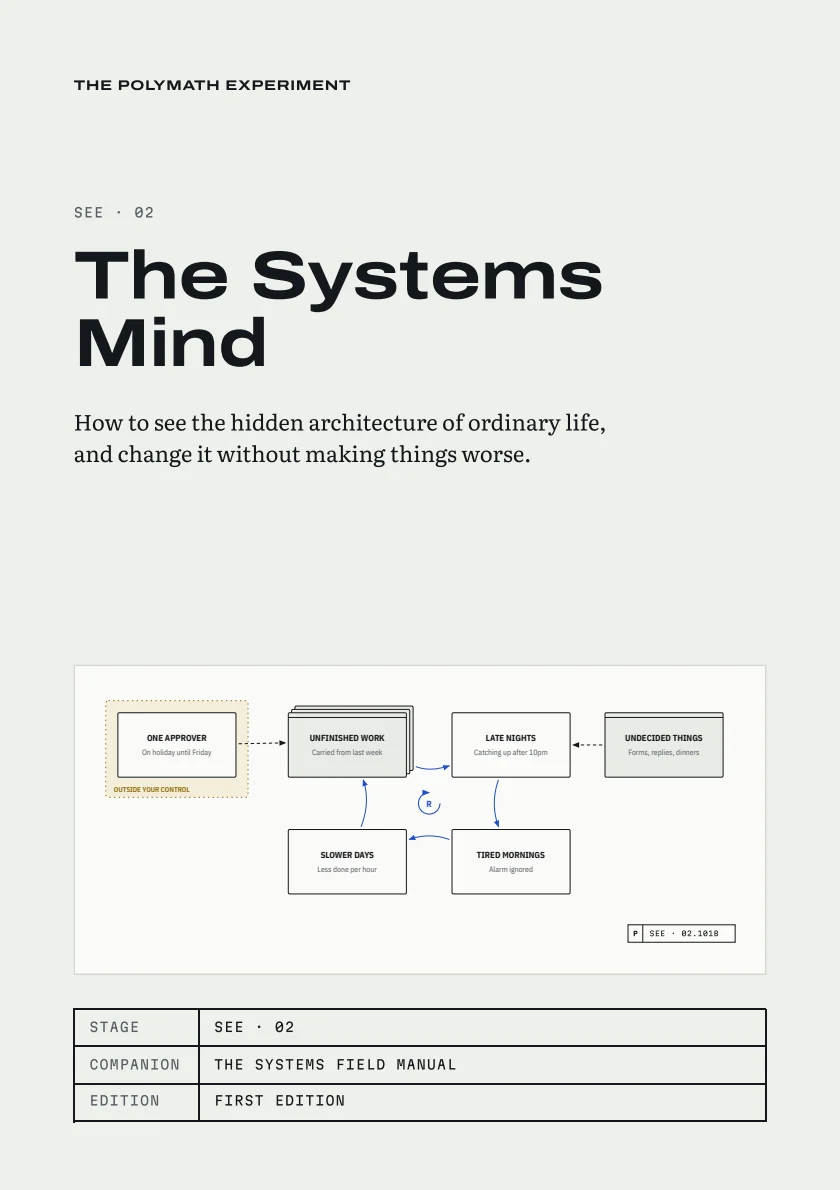
See · 02 · One idea, drawn twice
Every chapter draws a situation twice
First as it looks from inside, then as the system that's actually producing it. Here's the idea from Chapter 19, Fixes That Fail, with an everyday example of its own.
The method
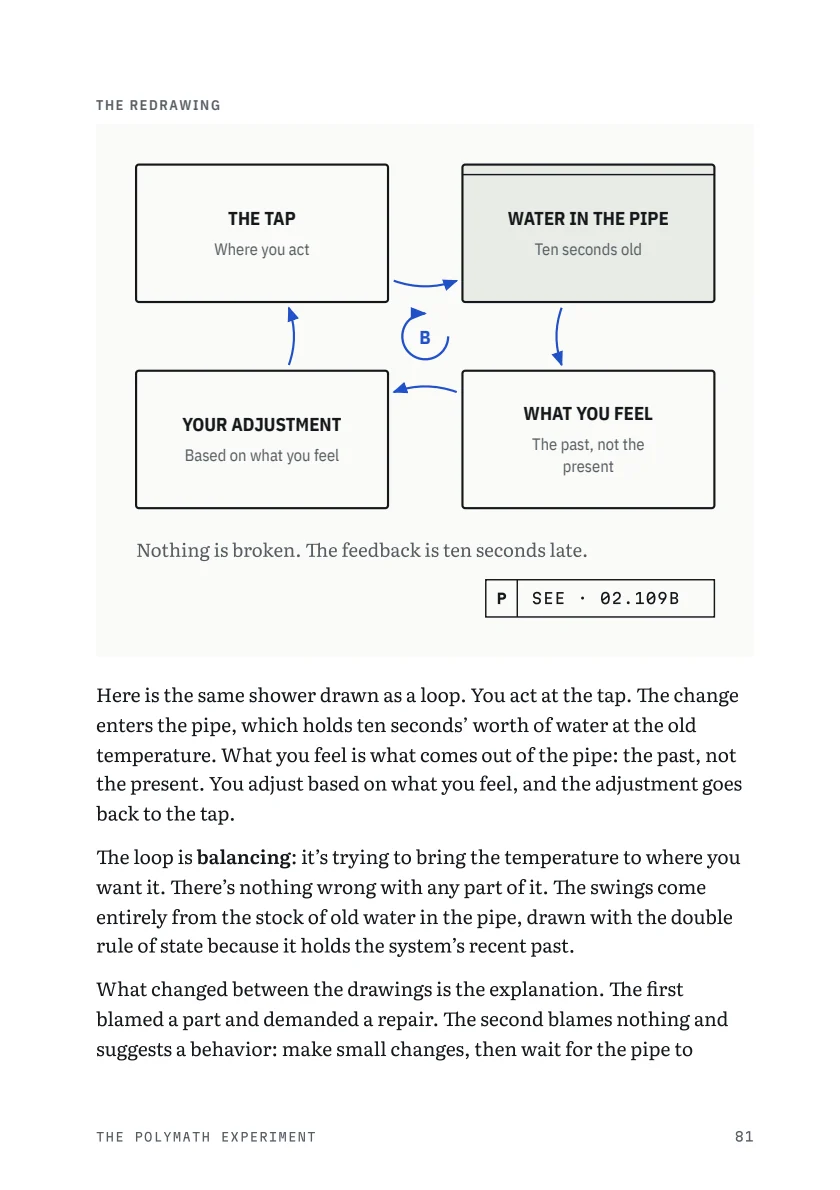
Every chapter draws one case twice
First as the people inside it see it: a string of events, bad luck and other people's mistakes. Then again as a system, with the loops, delays and constraints that were producing those events all along.
The gap between the two drawings is the lesson. Each chapter then explains the idea, shows where it misleads, and ends with an experiment to try in your own week.
- 34chapters, each built around one case
- 68diagrams in one consistent grammar
- 3interludes, including a worked post-incident review
- 45sources, every one checked, with a note on how strong the evidence is
Six parts
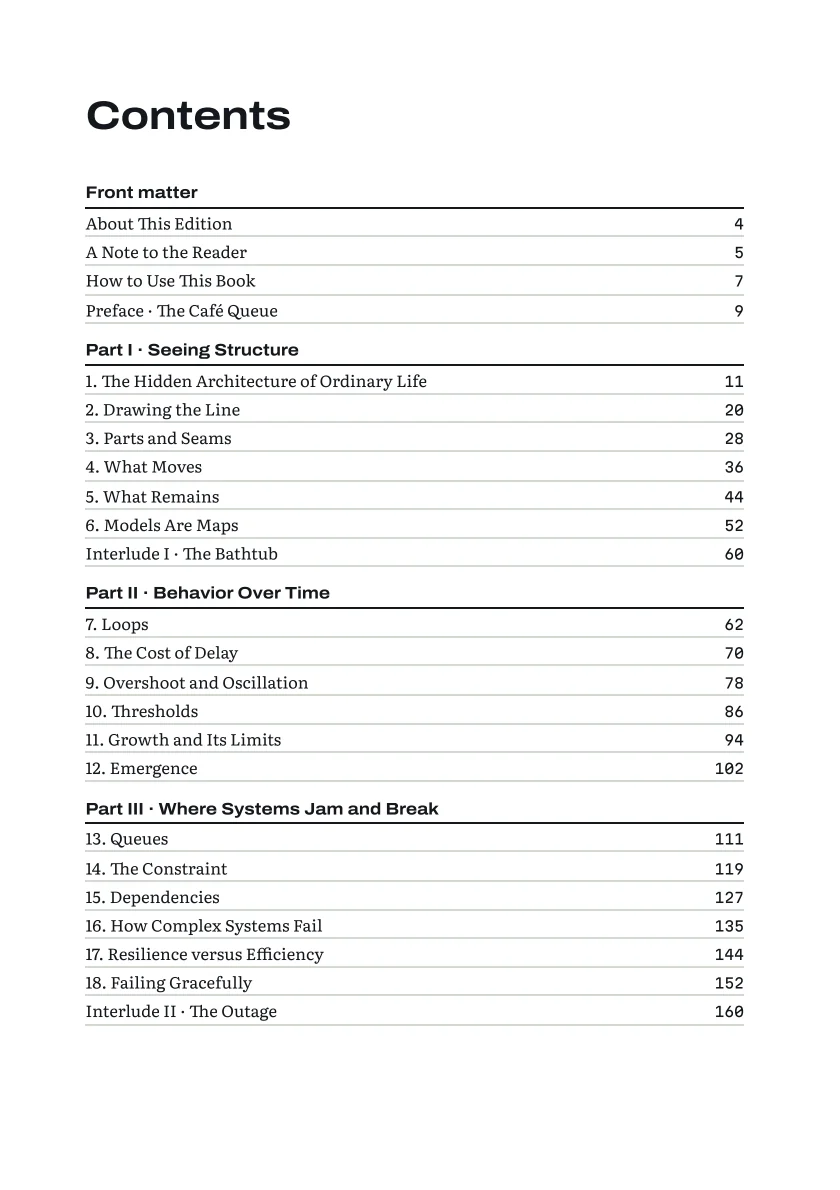
See · 02.101 – 02.134- Part ISeeing StructureChapters 1–6Boundaries, parts and seams, flows, stocks, and why every model is a map.
- Part IIBehavior Over TimeChapters 7–12Loops, delays, overshoot, thresholds, the limits to growth, and emergence.
- Part IIIWhere Systems Jam and BreakChapters 13–18Queues, constraints, dependencies, how complex systems fail, and how to fail gracefully.
- Part IVPatterns That RepeatChapters 19–24Fixes that fail, shifting the burden, drifting goals, success to the successful, escalation, the commons.
- Part VPeople Inside SystemsChapters 25–29Adaptive agents, incentives, information, measures that become targets, and organizations that build their own shape.
- Part VIChanging SystemsChapters 30–34Leverage, small experiments, second-order effects, whether a system should exist, and where systems thinking fails.
Inside the PDF
A5 pages · read on screen or print at home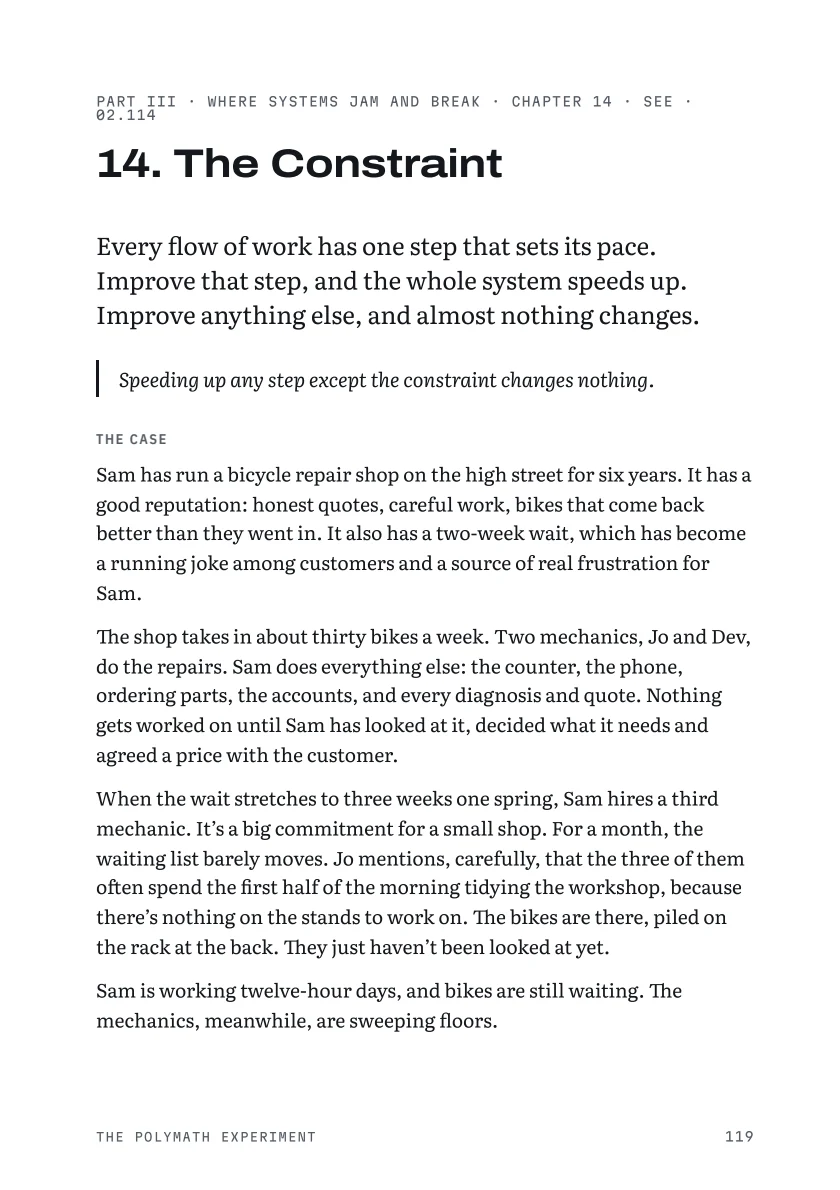
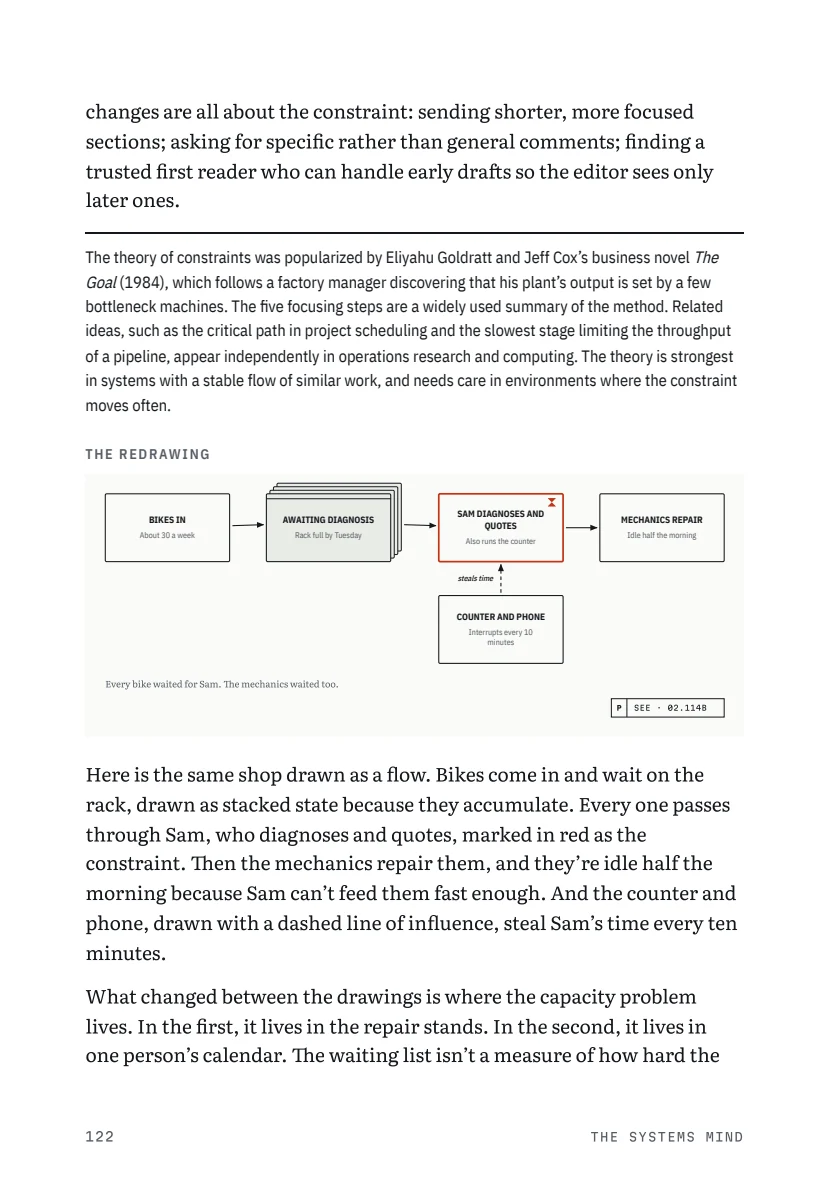
See · 02 · The complete set · PDFs
The book, the manual and the toolkit
The book explains why systems behave as they do. The Field Manual turns each concept into a short unit you can use at work tomorrow. The Toolkit gives you fourteen printable canvases to work through your own situations. All three share one grammar and one set of sheet numbers.
- The Systems MindPDF · 310 pp
- The Systems Field ManualPDF · 66 pp
- The Systems ToolkitPDF · 14 canvases
PDF only: instant download of all four files, no printed copies. Full refund within 14 days, no questions asked.
Start free
The way of seeing in this book grows out of The Polymath Bible, which is free. Get the book and a weekly letter with one idea, one diagram and one exercise.
Who it's for
Anyone who keeps meeting the same problems at work or at home and suspects the cause isn't the people involved. No maths, no jargon you aren't taught, and no software required: a pencil is enough.