Adapt · 06 · The book · PDF
The Adaptive Mind
What to do when reality breaks the plan.
Every plan is a guess about the future, and sooner or later the future does something the plan didn't expect: a customer disappears, a body fails, a job ends, a market moves. This book shows how to notice the change early, tell noise from a real shift, find the assumption that failed, decide whether to persist, adjust or let go, recover from setbacks without forced positivity, and change course, habits and even identity on purpose.
PDF only: instant download, 293 A5 pages, no printed copy. Taxes calculated at checkout.
Not useful? Full refund within 14 days, no questions asked.
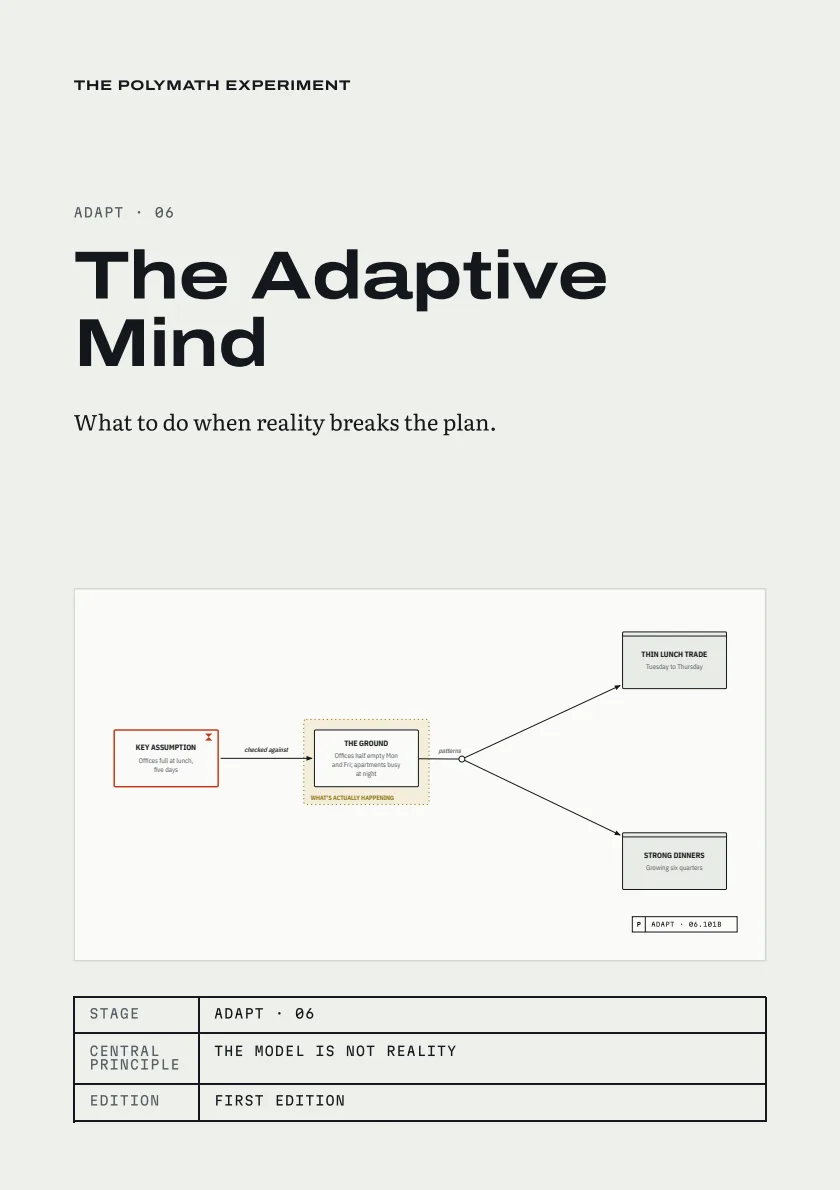
Adapt · 06 · One idea, drawn twice
Every chapter draws a plan twice
First as the plan said, then as the ground showed. Here's the pair from Chapter 1, The Plan and the Ground.
The method
Every chapter draws one situation twice
First as it was first understood: the plan held as if it were the world, every setback a reason to push harder. Then again as it really is: what's actually changing, which assumption it touches, what's still intact, and what the real choices are.
The gap between the two drawings is the lesson. Each chapter then shows how pilots, clinicians, coaches, planners and other practitioners handle the same moment, where the idea misleads, and ends with an experiment to try on a plan in your own life.
- 32chapters, each built around one situation
- 64diagrams in one consistent grammar
- 3interludes: commander's intent, half-time and organizations preoccupied with failure
- 38sources, every one checked, with a note on how strong the evidence is
Six parts
Adapt · 06.101 – 06.132- Part IThe Map and the GroundChapters 1–5Plans as models, weak signals, baselines that shift, explaining the evidence away, and questioning the assumption instead of the action.
- Part IIHolding On and Letting GoChapters 6–10Persist or pivot, why the person who started it is the last to see it failing, giving up well, the midpoint, and tripwires set in calm.
- Part IIISetbacksChapters 11–16The first days, how common resilience is, what we get used to and what we don't, kindness after mistakes, writing it through, and learning from success.
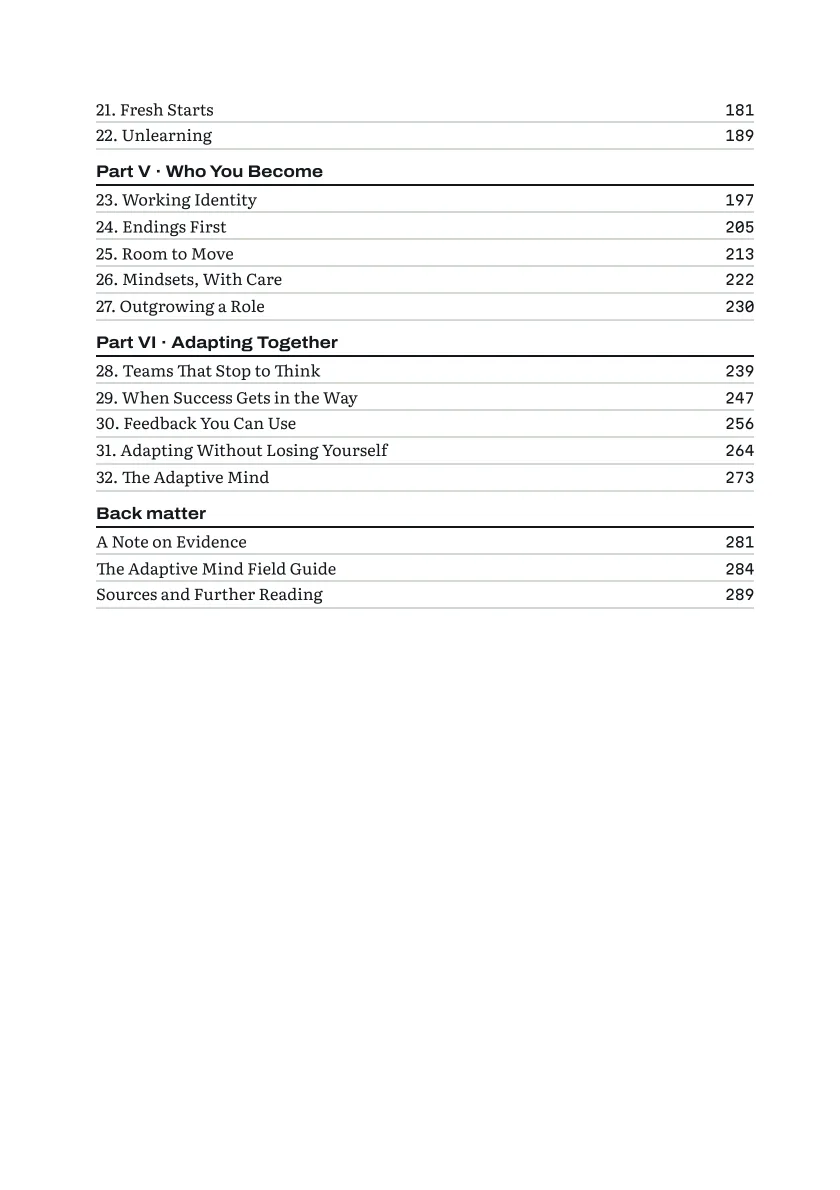
- Part IVChanging CourseChapters 17–22Small losses, exploring and exploiting, scenarios instead of forecasts, new habits in new places, fresh starts, and unlearning.
- Part VWho You BecomeChapters 23–27Trying out a new self, endings and the confusing middle, living with what won't go away, mindsets with care, and outgrowing a role.
- Part VIAdapting TogetherChapters 28–32Teams that stop to think, success that blocks change, feedback people can use, adapting without losing yourself, and the adaptive mind as a practice.
Inside the PDF
A5 pages · read on screen or print at home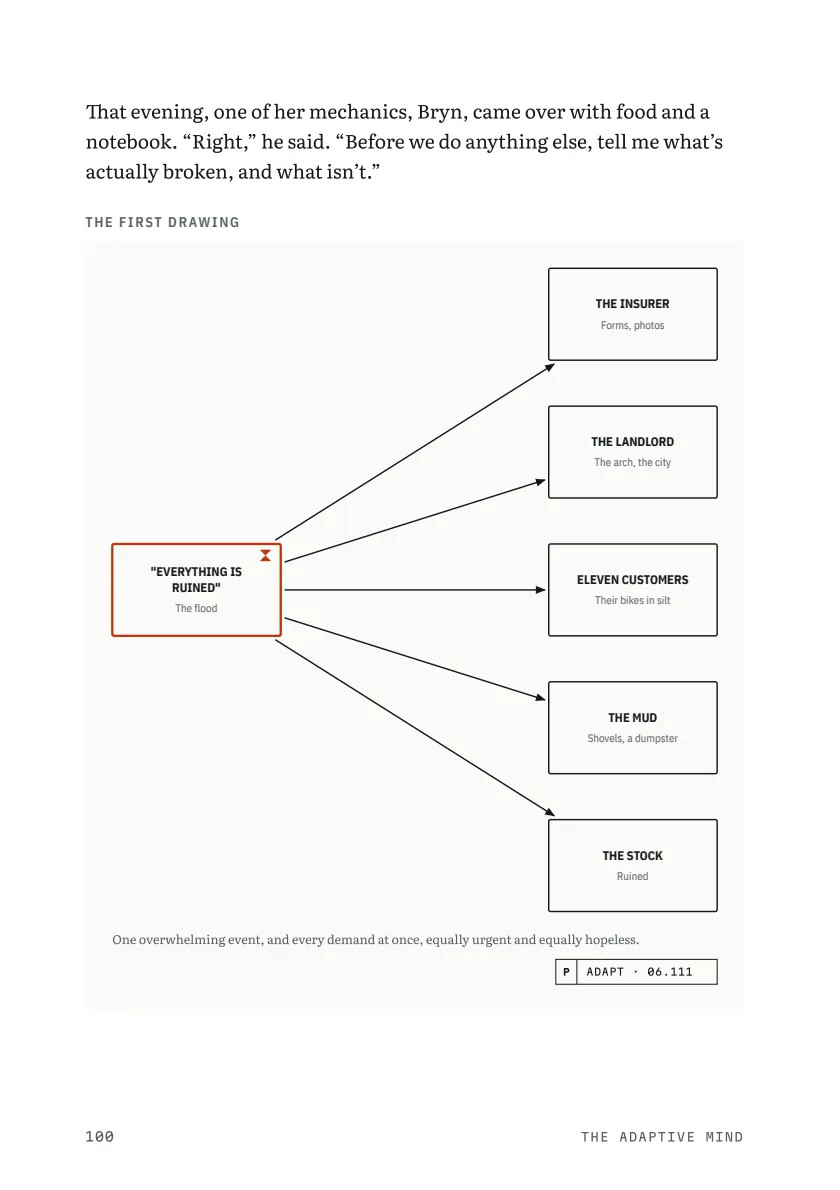
Adapt · 06 · The set · PDFs
The book and the field manual
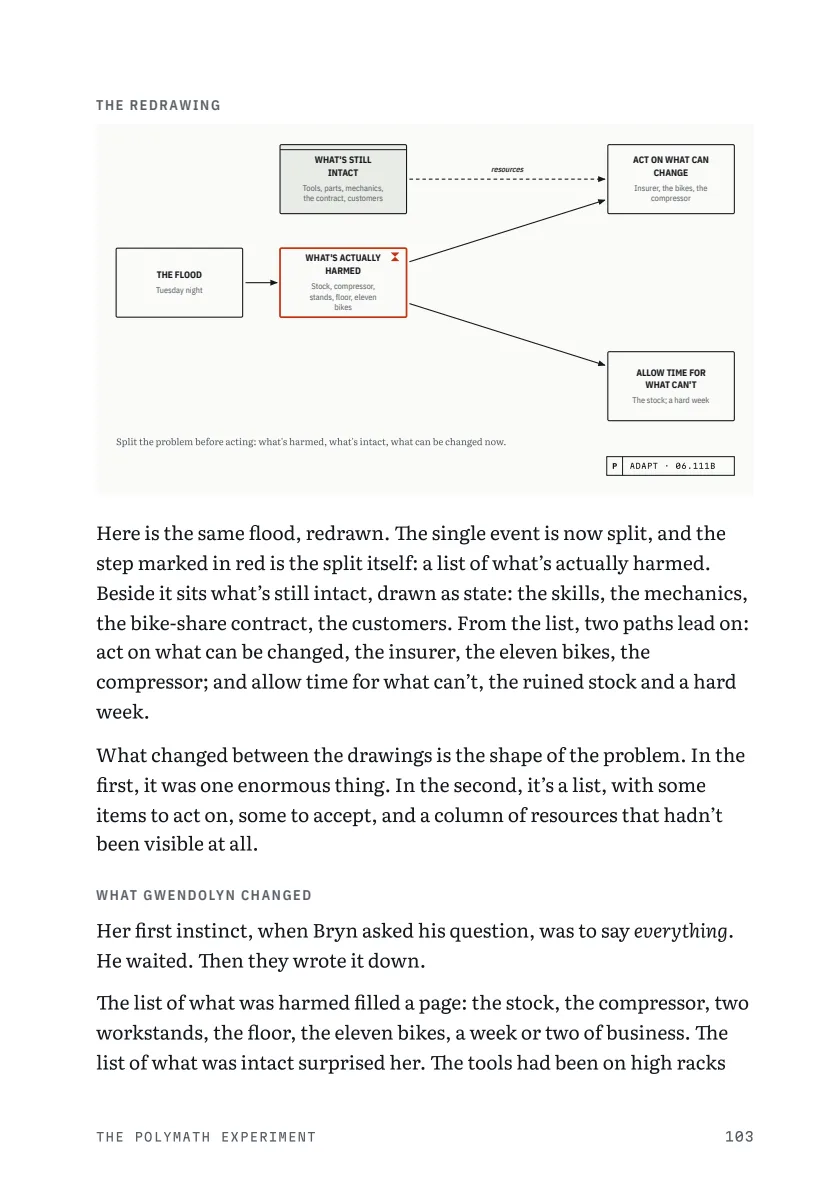
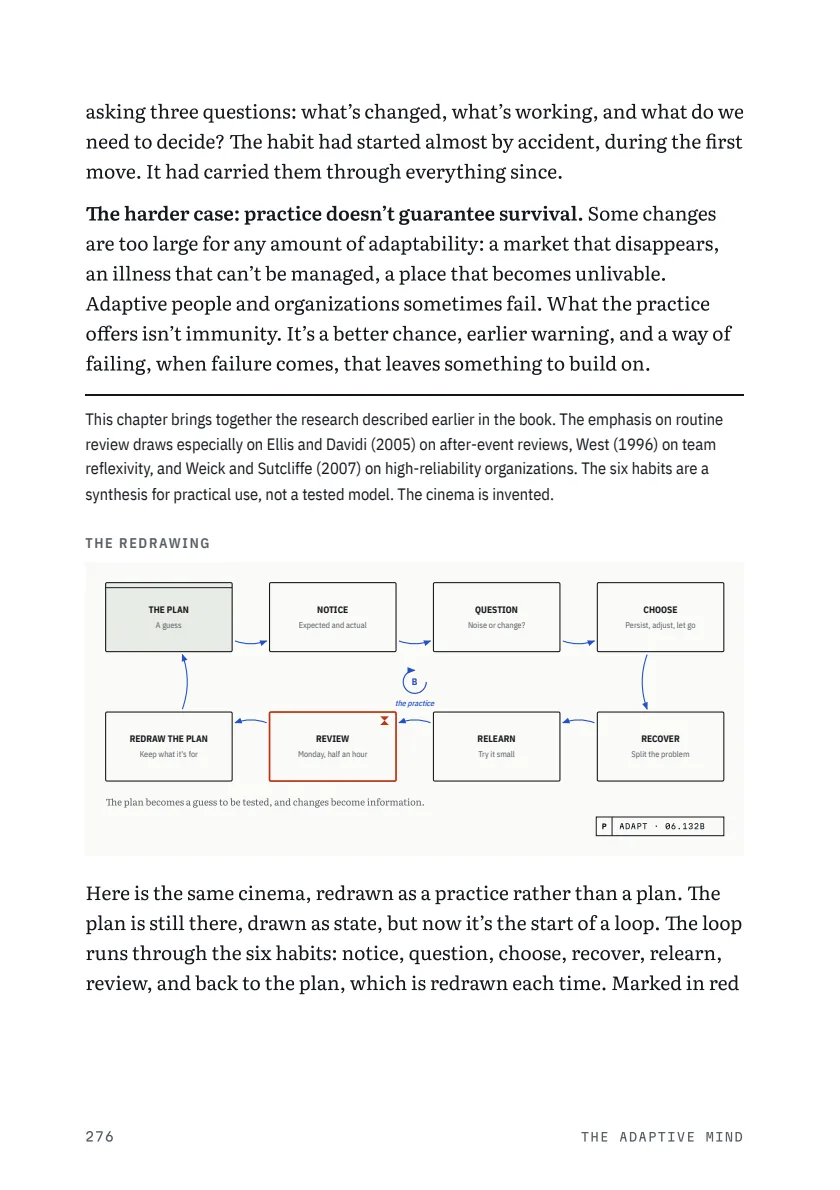
The book explains why sensible people hold on to failing plans and how to notice, recover and change course. The Adaptation Manual gives you the six questions, eleven concepts, a printable Redraw Canvas and a Recovery Plan to use the next time the ground moves. Both share one grammar and one set of sheet numbers.
- The Adaptive MindPDF · 293 pp
- The Adaptation ManualPDF · 85 pp
PDF only: instant download of both files, no printed copies. Full refund within 14 days, no questions asked.
Start free
The way of thinking in this book grows out of The Polymath Bible, which is free. Get the book and a weekly letter with one idea, one diagram and one exercise.
Who it's for
Anyone whose plans have met a world that wouldn't cooperate: in a business, a career, a project, a family or a body. It doesn't pretend setbacks are secretly gifts. Examples involve health, grief, money and work; they illustrate reasoning and are not professional advice.